When travelers think of Jeju Island, images of volcanic landscapes and pristine beaches often come to mind. But for those seeking an authentic taste of the island’s vibrant culture and incredible cuisine, Jeju City’s Dongmun Market stands out as an absolute must-visit destination. It’s more than just a place to shop; it’s a bustling sensory experience, offering everything from the freshest catches of the day to unique local street food that captures the essence of this beloved island. In 2026, as Korea actively promotes its traditional markets, Dongmun Market is receiving special attention, making it an even more compelling stop for any food adventurer.
What Makes Dongmun Market a Food Haven?
Dongmun Market isn’t just a market; it’s a living piece of Jeju’s heritage. As one of the oldest and largest traditional markets on the island, it has long served as a central hub for locals, and now, increasingly for travelers eager to experience authentic island life. What truly sets it apart, as reported by the Chosun Ilbo on February 23, 2026, is its reputation for “affordable seafood and local delights.” The sheer variety of fresh catches, from hairtail to abalone, pulled directly from Jeju’s surrounding waters, is a major draw.

Moreover, the market is currently undergoing significant enhancements. The Korea Times reported on March 4, 2026, that Dongmun Market is one of 11 “must-see” traditional markets being prepped for global spotlight. This initiative aims to make the market even more accessible and enjoyable for international visitors, a sentiment reinforced by its inclusion in the “K-Tourism Market Smile Campaign” mentioned by The Korea Times on June 10, 2026, which focuses on consumer protections and user-friendliness. This means a visit in 2026 promises a market experience that is both authentic and welcoming, ensuring travelers can explore with confidence and ease.
Essential Bites: Must-Try Foods at Dongmun
When you step into Dongmun Market, your senses are immediately overwhelmed—in the best possible way. The aroma of freshly grilled seafood mingles with the sweet scent of local tangerines, and the sounds of vendors calling out their wares create an undeniable energy. Fresh seafood is, naturally, at the heart of the culinary experience. Many stalls offer an incredible array of raw fish (hwe) for immediate consumption, often presented beautifully and served with various dipping sauces. You can find everything from local hairtail to snapper, with prices generally ranging from around 15,000 KRW to 50,000 KRW depending on the type and portion size. Beyond the raw delicacies, grilled fish, often prepared right before your eyes, is a popular choice, offering a smoky, savory counterpoint.
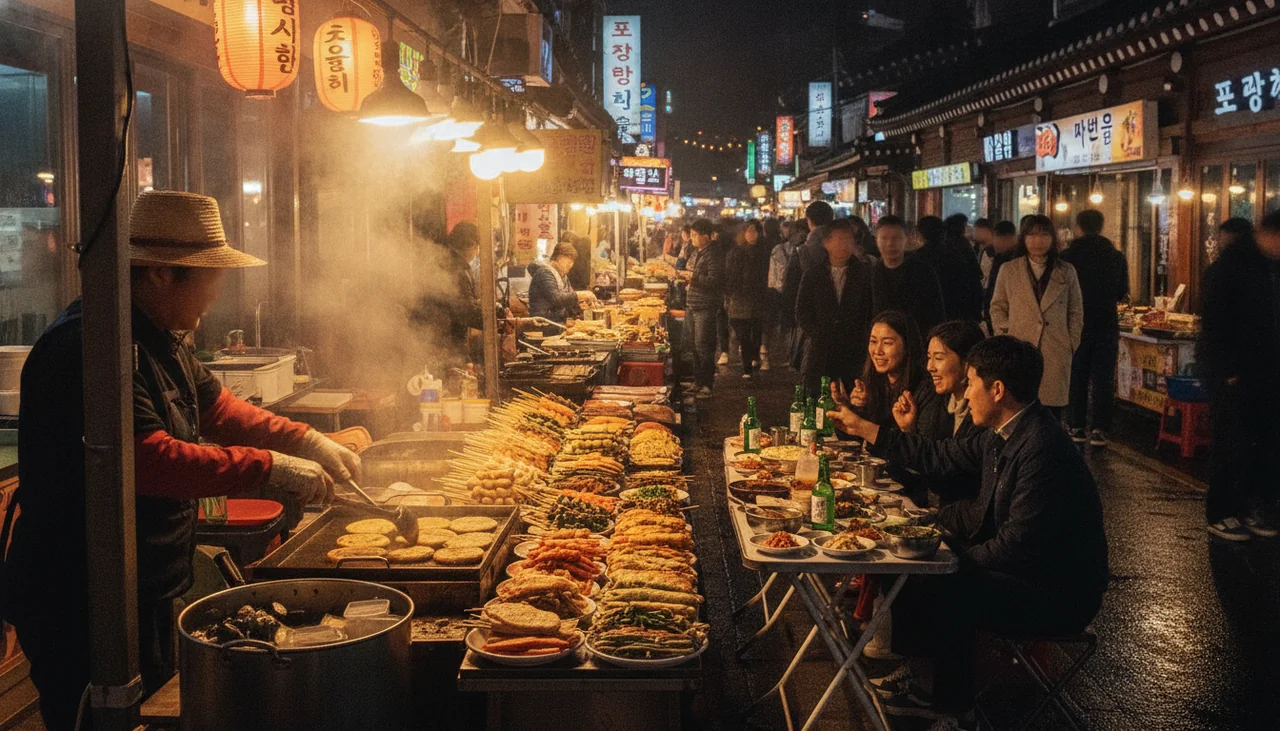
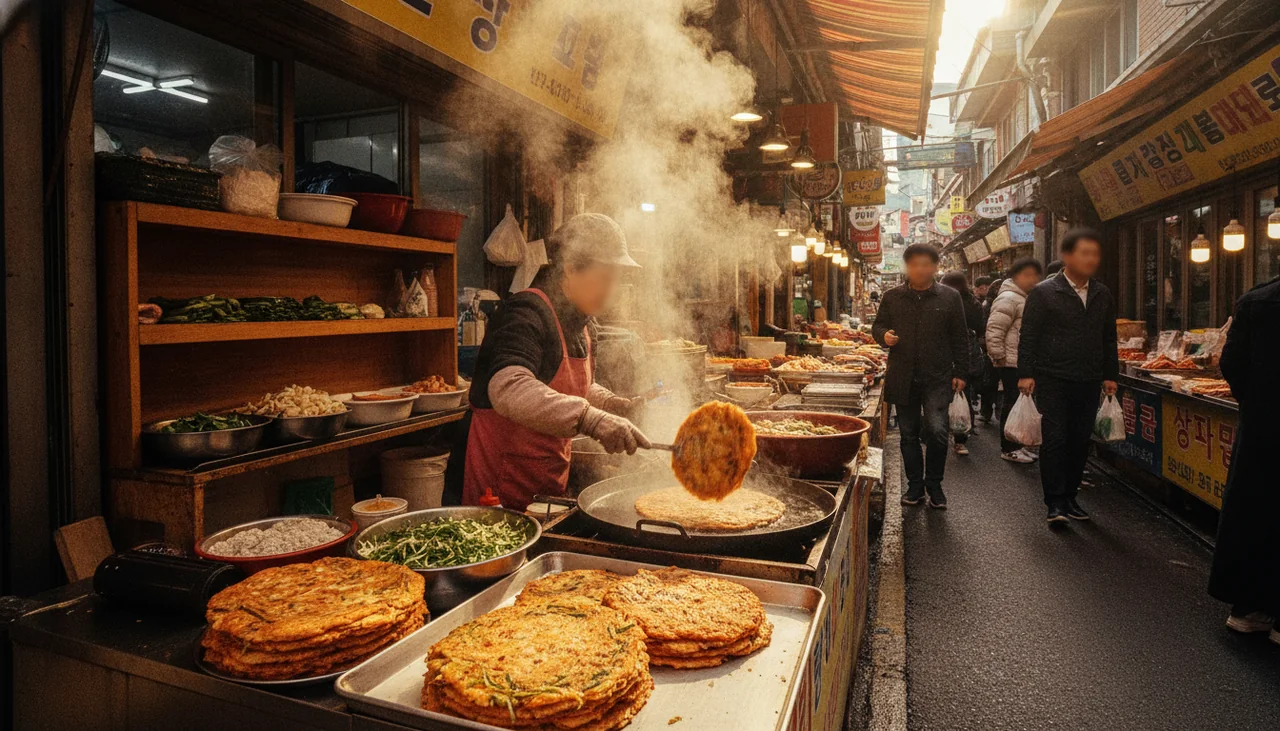
For those seeking traditional flavors, it’s often said that the market houses spots renowned for their classic Jeju dishes. Food content creator Choppaei, featured in a September 19, 2024 article on S. Korea’s top historic eateries, recommended a “must-go historic restaurant” within Dongmun Traditional Market for its traditional cuisine. While specific eateries aren’t named, this highlights the market’s reputation for offering authentic, time-honored recipes that truly represent Jeju’s culinary identity. Don’t miss out on local street food staples either; common favorites include various Korean pancakes (jeon), savory skewers, and comforting bowls of fish cake soup (eomuk-tang), usually available for around 3,000-8,000 KRW per serving. And of course, being Jeju, look for snacks and drinks featuring the island’s famous Hallabong tangerines, which offer a refreshing, uniquely Jeju taste.
Day vs. Night: Experiencing Dongmun’s Dual Charms
Dongmun Market offers two distinct yet equally captivating experiences depending on the time of day. During the daytime, it operates as a bustling traditional market, providing a unique glimpse into island life, as noted by Yonhap News Agency on November 11, 2016. This is when the wet market truly shines, with vendors proudly displaying their morning’s catch, from shimmering silver hairtail to vibrant red snapper and fresh abalone. Many travelers find this the ideal time to pick up local produce, dried seafood, and unique Jeju souvenirs. The daytime market is a hub of daily commerce, offering a vibrant, authentic atmosphere that locals have cherished for generations. It’s a place where the rhythms of island life are on full display, from the bargaining between vendors to the careful selection of ingredients for the evening meal.
As the sun begins to set, however, Dongmun Market undergoes a spectacular transformation. It evolves into a lively night market, a phenomenon highlighted by OutdoorHub on October 5, 2023, and further detailed by TheSmartLocal on July 4, 2025, as a key part of Jeju’s night-time attractions. The stalls that once sold fresh produce convert into vibrant food stands, serving up an entirely different array of culinary delights. The night market atmosphere is electric, filled with music, laughter, and the irresistible aromas of sizzling street food. This is where you’ll find creative twists on Korean street food classics, alongside unique Jeju-inspired dishes designed for easy consumption on the go. Expect to see long lines for popular stalls, but the experience of sampling diverse, often innovative, dishes under the twinkling lights is well worth it. Typical night market snacks and small dishes usually range from 5,000 KRW to 15,000 KRW, making it an excellent spot for a budget-friendly and fun dinner.
Practical Tips for Your Dongmun Market Food Adventure
To make the most of your culinary journey through Dongmun Market, a little planning goes a long way. The market is remarkably easy to access, making it a convenient stop upon arrival or before departure from Jeju Island. It’s located close to Jeju International Airport and Jeju Port Terminal, a fact highlighted by Yonhap News Agency on November 11, 2016, and also mentioned in a May 14, 2015 article on traditional market tours for foreigners. This proximity means you can often reach it by a short taxi ride (around 10-15 minutes from the airport) or local bus. For public transport, look for buses heading towards Dongmun Market or Jungang-ro, a major street in Jeju City.
Best Time to Visit: For the full traditional market experience with the widest selection of fresh seafood and local goods, aim for a morning or early afternoon visit. If the vibrant street food scene is your priority, the night market typically kicks off in the late afternoon and continues into the evening, usually until around 9-10 PM. Visiting during the shoulder seasons (spring or autumn) often means more comfortable weather and slightly fewer crowds than the peak summer months.
Rough Budget: A modest budget of around 20,000-40,000 KRW per person can get you a satisfying variety of street food snacks and a main dish or two, especially at the night market. If you plan on purchasing fresh seafood to take away or enjoy at one of the market’s dine-in sections, your budget might increase to 30,000-70,000 KRW or more, depending on your choices and how many people you’re feeding. Cash is often preferred by smaller vendors, so it’s wise to have some on hand, although many stalls now accept card payments.
Combine Your Visit: Dongmun Market’s central location in Jeju City makes it easy to pair with other attractions. The historic area around the market, including various shops and cultural sites, is great for a post-meal stroll. Many travelers also combine their market visit with a trip to Jeju Black Pork Street, known for its specialty restaurants, or explore the coastal roads nearby for scenic views of the ocean. Honestly, the appeal here is its accessibility and the sheer variety it offers, making it a perfect starting or ending point for any Jeju itinerary.
Quick Summary
Jeju City’s Dongmun Market is a dynamic culinary destination, offering travelers a vibrant taste of the island. In 2026, it stands as one of Korea’s “must-see” traditional markets, renowned for its fresh, affordable seafood and diverse local delights, as highlighted by the Chosun Ilbo (Feb 23, 2026) and The Korea Times (Mar 4, 2026). The market seamlessly transitions from a bustling traditional daytime market to a lively night market, each offering unique food experiences. Its convenient location near Jeju International Airport and Jeju Port Terminal makes it an easily accessible and essential stop for any food-focused journey on Jeju Island.
Found this helpful? Bookmark us! ⭐