Jeju Island, often hailed as Asia’s Hawaii (Asia News Network, Oct 2022), is a treasure trove of natural beauty and unique culinary experiences. While many travelers flock to its stunning beaches and volcanic landscapes, for those in the know, Jeju’s true heart often lies in its incredibly fresh seafood. And when it comes to a quintessential seafood journey, the coastal town of Hallim on the island’s western side stands out as a vibrant hub where tradition meets the freshest catches of 2026.
Honestly, the appeal of Hallim isn’t just about the food; it’s about the entire coastal atmosphere. The air carries the scent of the sea, and the rhythm of life feels deeply connected to the ocean. What stands out is how this area, while accessible, still retains an authentic local charm, making it a perfect destination for food adventurers seeking genuine Jeju flavors.
Hallim’s Authentic Coastal Flavors
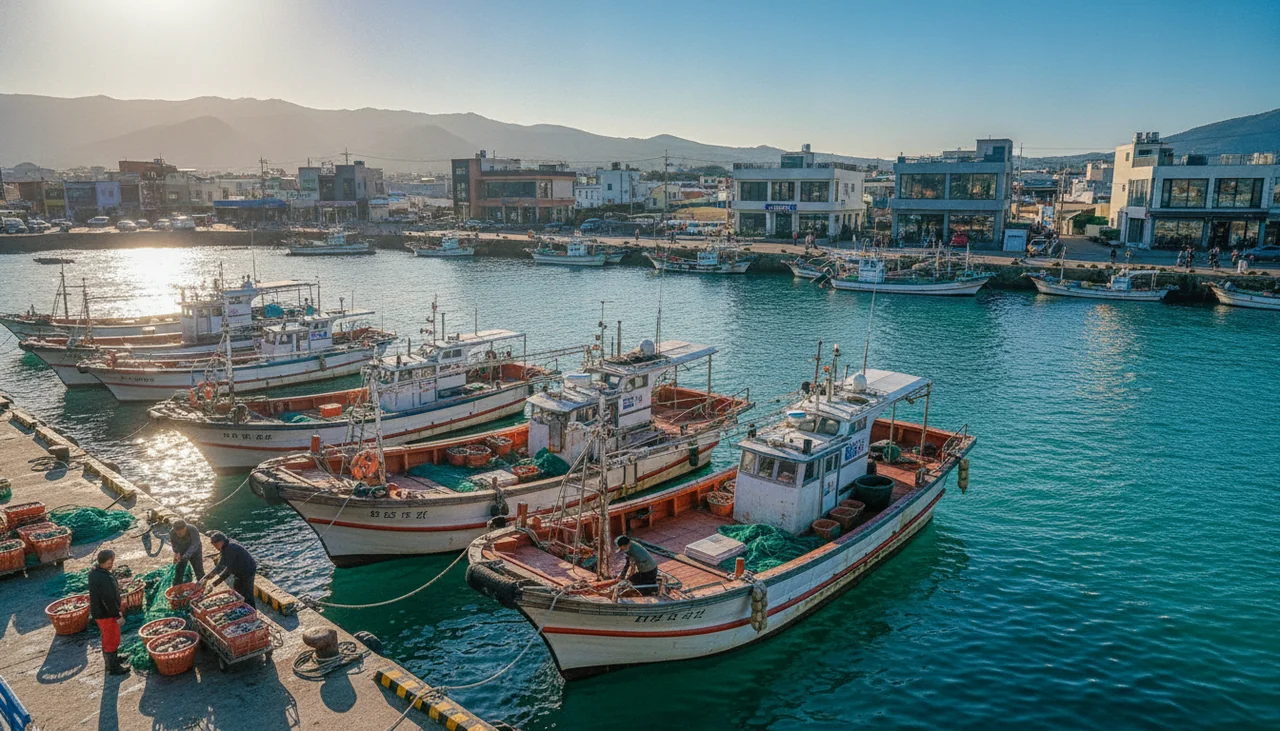
Hallim’s prime location along Jeju’s west coast positions it as a significant fishing port, making it a natural magnet for seafood lovers. The waters surrounding Hallim are rich with a diverse array of marine life, and the local fishing community ensures a steady supply of fresh catches daily. One of the standout catches frequently associated with Hallim is cutlassfish (galchi). This long, silvery fish is highly prized in Korean cuisine for its delicate flavor and tender texture. In fact, Coupang, a major e-commerce platform, directly purchased 90 tons of cutlassfish from the waters off Hallim, Jeju Island, in the past year, as part of their efforts to acquire 9,400 tons of fruit and seafood from rural areas by 2025 (Seoul Economic Daily, Feb 2026). This significant volume underscores Hallim’s importance as a source for this popular fish.

Beyond cutlassfish, travelers can expect to find a bounty of other local favorites. From various types of whitefish perfect for grilling or stewing to an assortment of shellfish and octopus, the diversity is impressive. Many travelers find that the simplicity of preparation often highlights the inherent freshness and quality of Hallim’s seafood, allowing the natural flavors of the ocean to truly shine. The immediate proximity of the port to dining establishments means that the journey from the sea to the table is remarkably short, guaranteeing an unparalleled level of freshness.
Exploring Hallim’s Seafood Scene
When it comes to experiencing Hallim’s seafood, the dining landscape offers a range of options that focus on traditional Korean preparation methods. You’ll find establishments specializing in hearty seafood stews (haemultang), delicate raw fish platters (hoe), and famously grilled fish dishes. These places often pride themselves on using locally sourced ingredients, showcasing the day’s fresh haul.
A known spot in the area for experiencing Korean-style seafood and fish dishes is `독개물항 제주한림 협재 본점`, located at 478 Hallim-ro, Hallim-eup, Jeju-si, Jeju-do. Places like this are representative of the local commitment to showcasing the ocean’s bounty, offering a menu centered around the fresh catches that define Hallim’s culinary identity. While specific menu items and exact prices can vary with the season and market conditions, a typical seafood meal involving grilled fish or a generous stew might range from around 20,000 to 40,000 KRW per person, depending on the type of seafood and portion size. Sharing larger platters or stews among a group often provides the best value and variety. The focus is always on the quality of the ingredients, often served with an array of traditional Korean side dishes (banchan) that complement the main course beautifully.
The Enduring Legacy of the Haenyeo
No discussion of Jeju’s seafood, especially in areas like Hallim, would be complete without acknowledging the legendary haenyeo, or “sea women.” These brave female divers, many of whom are elderly, dive into the cold ocean waters without oxygen tanks, relying solely on their breath-holding abilities to harvest seafood such as abalone, conch, and octopus. Their unique culture and sustainable fishing practices were recognized by UNESCO as an Intangible Cultural Heritage of Humanity in December 2016 (The Korea Times, Dec 2016).

The presence and legacy of the haenyeo are deeply intertwined with the identity of Jeju and its seafood. Many of the fresh ingredients found in Hallim’s kitchens are harvested by these resilient women. While their numbers are dwindling, with some of Korea’s oldest sea women reflecting on a lifetime underwater (조선일보, Jun 2024), their spirit and contribution continue to shape the local food scene. Visiting Hallim offers a tangible connection to this living heritage, allowing travelers to appreciate the journey of their seafood from the ocean to their plate, steeped in generations of tradition and respect for the sea. Observing their work, or even just recognizing their cultural impact, adds a profound layer to the culinary experience.
Navigating Seasonal Catches & Food Safety in 2026
Eating seasonally is a key aspect of enjoying Jeju’s cuisine. As noted by Culture Trip in February 2020, a chef’s guide to eating seasonally on Jeju Island highlights the importance of fresh, in-season ingredients. For seafood, this means certain species are at their peak during specific times of the year, offering the best flavor and texture. For example, the Hallim Fisheries Cooperative FPC Marine Products Festival, held from November 4-15 (Jeju Island Maritime Affairs and Fisheries Bureau, Oct 2023), is a great example of local initiatives celebrating seasonal marine products, offering a glimpse into what’s best during the autumn months.
Food safety is, of course, a paramount concern for any traveler. While Jeju is renowned for its fresh seafood, it’s wise to be informed. The Seoul Economic Daily reported in July 2026 that Vibrio bacteria were detected off Jeju for the first time this year. This highlights the importance of choosing reputable establishments and ensuring that seafood, especially raw preparations, is handled and stored correctly. The good news is that local authorities are vigilant. Jeju Island Maritime Affairs and Fisheries Bureau Director Jeong Jae-cheol confirmed in October 2023 that radioactive seafood checks in Jeju were compliant, indicating ongoing monitoring efforts. Travelers can generally feel confident in the safety of seafood provided they opt for establishments with good hygiene practices and, if concerned, choose cooked dishes. It’s always a good idea to inquire about the origin of the seafood and opt for places that are busy, which often indicates fresh turnover of ingredients.
Your Practical Guide to a Hallim Seafood Getaway
Planning a trip to Hallim for its seafood in 2026 is relatively straightforward.
How to Get There: Hallim-eup is easily accessible from Jeju City. Many travelers opt for renting a car for flexibility, which allows for exploring the scenic coastal roads. Alternatively, public buses connect Hallim to major points on the island. The area is centered around Hallim Port. Best Time to Visit: While Jeju is a year-round destination, many find spring (April-May) and autumn (September-October) ideal for comfortable weather and diverse seasonal catches. Summer (June-August) is also popular, though it can be warmer and more crowded. Winter (November-March) offers unique seasonal delights like yellowtail, often celebrated at festivals, but prepare for cooler temperatures. Rough Budget: For a satisfying seafood meal, expect to spend anywhere from 20,000 KRW to 50,000 KRW per person, depending on the type and quantity of seafood chosen. More elaborate multi-course meals or premium ingredients like abalone could be higher. Nearby Spots to Combine: Hallim Port: A bustling hub where you can watch fishing boats come and go, offering a real sense of local life. Udo-myeon: Just a 15-minute boat ride from Hallim Port, Udo offers stunning sea views and unique rock formations (Asia News Network, Oct 2024). It’s a fantastic half-day or full-day excursion. Geumneung-ri, Hallim-eup: This area is part of the drone delivery service launched by Jeju Island to its neighboring islands in July 2024 (Jeju Island starts drone delivery service, Jul 2024). It’s an interesting example of modern innovation in a traditional setting and offers scenic coastal views. Hyeopjae Beach: Just south of Hallim Port, Hyeopjae is one of Jeju’s most beautiful beaches, perfect for a post-meal stroll or relaxation.
Quick Summary
Hallim in 2026 remains a jewel on Jeju Island for seafood enthusiasts. Its authentic coastal flavors, deeply rooted in the traditions of the haenyeo and sustained by a vibrant fishing community, offer a truly memorable culinary journey. From the prized cutlassfish to a diverse array of fresh catches, prepared in classic Korean styles, Hallim invites you to savor the taste of Jeju’s pristine waters. With practical tips on getting there, budgeting, and combining your visit with nearby attractions, your Hallim seafood adventure awaits!
Found this helpful? Bookmark us! ⭐