Seoul is a city that never ceases to surprise, with countless neighborhoods each offering a distinct flavor. While many travelers naturally gravitate towards well-known hotspots, a growing number are seeking out the city’s hidden gems. According to Business Insider on May 27, 2026, many frequent visitors to Seoul are now preferring “lesser-visited areas” for a more authentic experience. Among these, Mangwon-dong in western Seoul stands out as a charming, mellow alternative, embodying the city’s daytime appeal and a burgeoning local food scene.
Often described as having a relaxed, daytime charm that contrasts with Hongdae’s vibrant nightlife just “two subway stops away,” Mangwon-dong has steadily grown into a hub for unique neighborhood eateries and bustling street food stalls, as noted by Korea JoongAng Daily on April 23, 2026, and The Korea Times on March 4, 2026. This delightful district offers a genuine taste of everyday Seoul, inviting visitors to slow down and savor its culinary delights.
The Unique Charm of Mangwon-dong
Mangwon-dong truly sets itself apart with its unpretentious, laid-back atmosphere. While nearby areas might pulse with late-night energy, Mangwon-dong cultivates a mellow, inviting vibe that’s perfect for daytime exploration. Many travelers find this neighborhood to be a refreshing change of pace, offering a glimpse into local life away from the more intense tourist crowds. It’s often said that if Hongdae is for Seoul’s nights, Mangwon is for its sunlit days, a sentiment echoed by Korea JoongAng Daily on April 23, 2026, which praised Mangwon as a neighborhood “embodying the city’s daytime charm.”
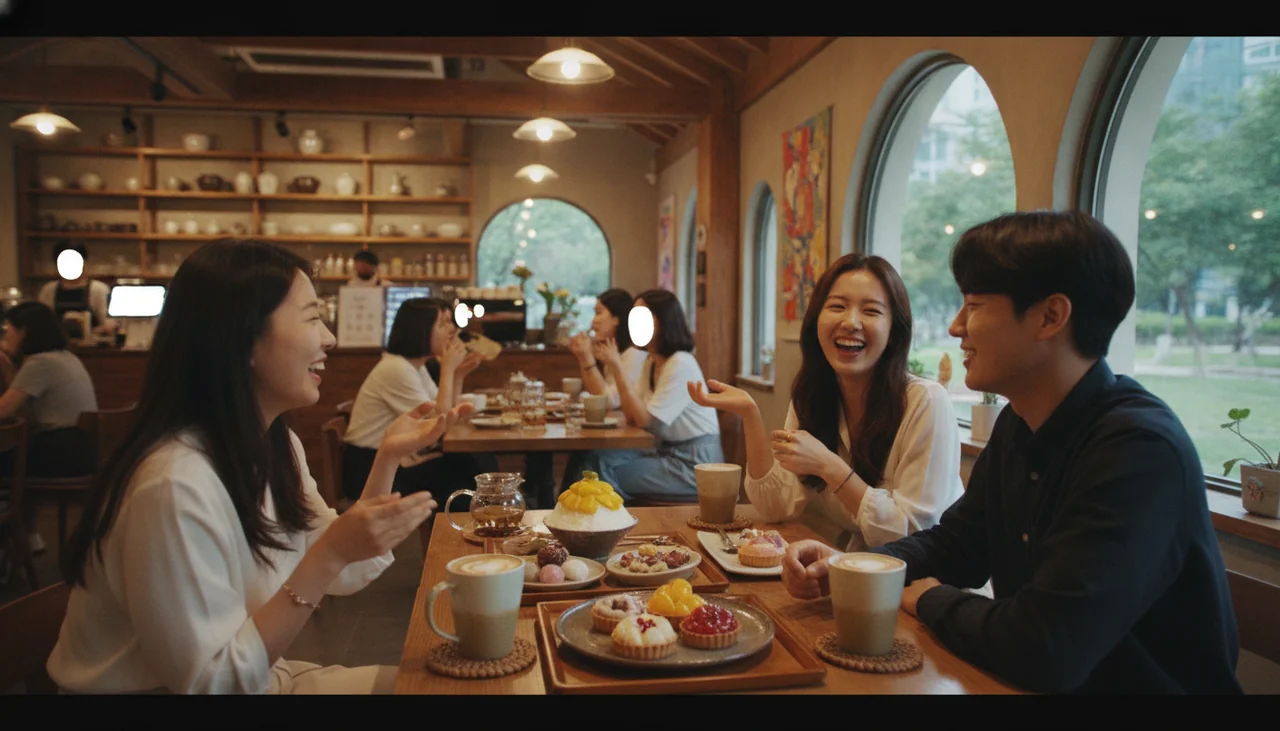
This sense of calm permeates the entire area, from its tree-lined streets to its cozy cafes and independent shops. The neighborhood has organically developed its own distinct character, attracting those who appreciate a slower, more mindful pace. It’s an ideal spot for those looking to experience Seoul through the lens of its local communities, discovering the small, often family-run establishments that form the backbone of Korean culinary culture. The organic growth of its unique character is a testament to its appeal, drawing in various interests and different generations, as seen in similar regeneration narratives for neighborhoods like Yeonhui-dong, mentioned by Korea JoongAng Daily on April 12, 2024.
A Culinary Journey Through Local Flavors
Mangwon-dong’s reputation as a culinary destination is built on its diverse array of local eateries and street food. The neighborhood is celebrated for offering a wide spectrum of flavors, from traditional Korean comfort food to more contemporary takes on classic dishes. While it’s impossible to list specific establishments, it’s often noted that the area boasts “one of the most famous eateries in Mangwon,” a testament to its strong food identity, as reported by Korea JoongAng Daily on April 23, 2026. These local spots are typically characterized by their authentic flavors, fresh ingredients, and a welcoming, unpretentious atmosphere.
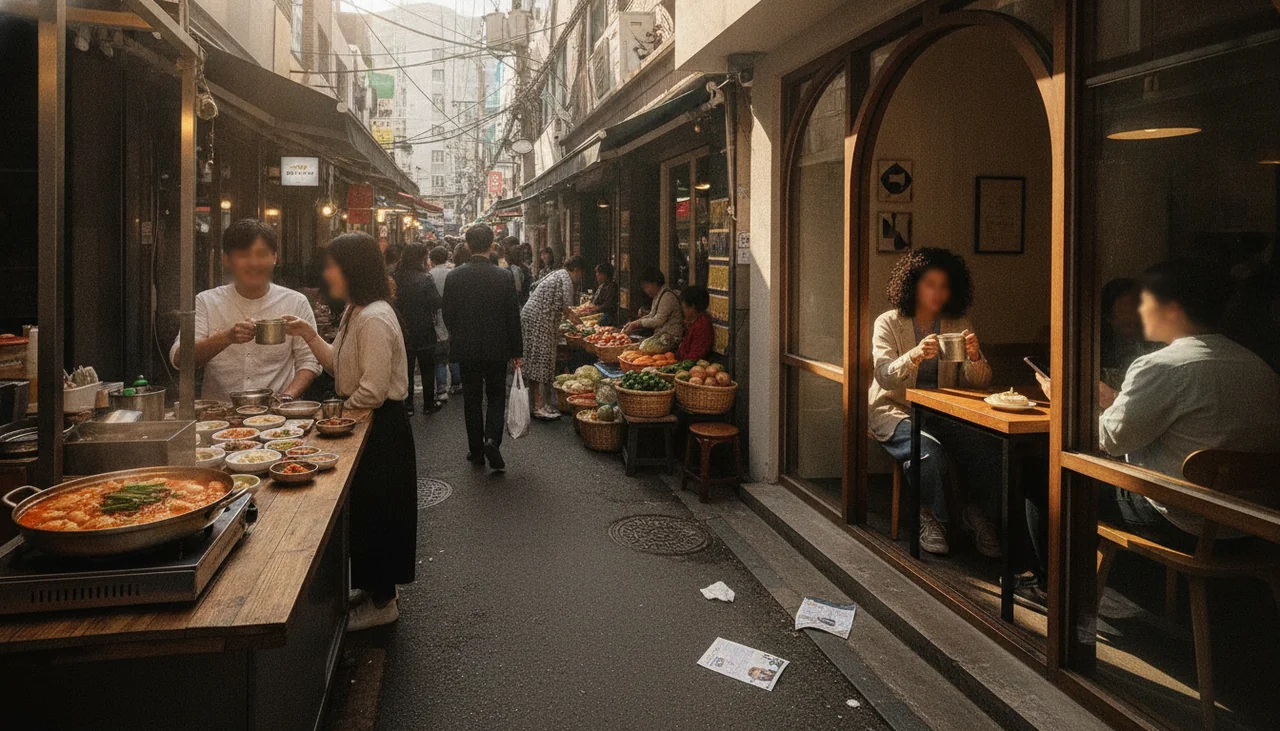
Visitors can expect to find everything from hearty bowls of gukbap (rice soup) and rich jjigae (stews) to crispy jeon (savory pancakes) and various noodle dishes. Street food stalls, particularly around the market area, offer quick and delicious bites like tteokbokki (spicy rice cakes), eomuk (fish cakes), and fried snacks, perfect for snacking as you explore. A typical meal at a local eatery might range from around 8,000 to 15,000 KRW, while street food items are generally more affordable, often falling between 3,000 and 7,000 KRW per item. The appeal here is the chance to eat like a local, discovering flavors that have been perfected over generations.
Mangwon Market: A Traditional Heartbeat
At the very core of Mangwon-dong’s culinary appeal is Mangwon Market, a vibrant traditional market that truly captures the spirit of the neighborhood. Traditional markets are considered “a core tourism asset” by Korea, with plans to prep “11 ‘must-see’ traditional markets for global spotlight,” according to The Korea Times on March 4, 2026. Mangwon Market exemplifies this, offering an immersive experience into daily Korean life and local gastronomy. Reports from 조선일보 on January 16, 2026, indicate that foreign tourists are increasingly “diving into Seoul’s local markets,” seeking out these authentic cultural hubs.
Here, the air is filled with the aroma of freshly prepared food, and the sounds of vendors calling out their wares create a lively, engaging atmosphere. You’ll find stalls brimming with fresh produce, seafood, and a delightful assortment of prepared foods. From crispy dakgangjeong (sweet and sour fried chicken) to various banchan (side dishes) and freshly made kimbap, the market is a treasure trove for food lovers. Many travelers enjoy assembling a picnic from the market’s offerings, finding a nearby spot to savor their purchases. Prices for market food are typically very reasonable, with many dishes costing between 5,000 and 10,000 KRW, making it an excellent budget-friendly dining option.
The Cafe Culture & Mellow Vibes
Beyond its savory eats, Mangwon-dong also boasts a thriving cafe culture that perfectly complements its mellow ambiance. Seoul’s cafe scene has been booming, with Nikkei Asia reporting on June 28, 2025, about the city’s vibrant coffee culture. Mangwon-dong contributes significantly to this trend with its array of independent cafes, each offering a unique aesthetic and beverage selection. Many of these establishments focus on quality brews, comfortable environments, and often, unique dessert offerings.
A notable trend in Seoul’s cafes, which Mangwon-dong certainly participates in, is the spotlight on innovative matcha variations, as highlighted by The Korea Herald on August 23, 2025. Visitors can expect to find carefully crafted lattes, specialty pour-overs, and a relaxed setting ideal for unwinding after exploring the neighborhood. These cafes are not just places for coffee; they are social hubs, creative spaces, and perfect spots for people-watching. A typical specialty coffee or tea drink might cost between 5,000 and 8,000 KRW.
Practical Tips for Your Mangwon-dong Visit
To make the most of your Mangwon-dong food adventure, here are some practical tips:
Best Time to Visit: For the full “mellow daytime charm” experience, weekdays during lunch hours (around 12 PM – 2 PM) and early afternoon are ideal. The market is busiest in the late morning and early afternoon. Weekends can be more crowded, but still offer a great atmosphere. How to Get There: The most convenient way to reach Mangwon-dong is by taking the Seoul Subway Line 6 to Mangwon Station. The neighborhood’s main attractions, including the market and many eateries, are easily accessible within a short walk from the station exits. Rough Budget: For a day of exploring and eating, a budget of approximately 20,000 – 40,000 KRW per person should cover a few street food snacks, a market meal, a cafe visit, and perhaps a small souvenir. This can vary depending on your appetite and choices. Nearby Spots to Combine: Mangwon-dong’s excellent location makes it easy to combine with other popular neighborhoods. It’s just “two subway stops away” from Hongdae, offering a contrasting experience. Other nearby areas like Hapjeong-dong and Yeonnam-dong, mentioned by Korea JoongAng Daily on April 12, 2024, are also known for their cafes and unique shops, making for a comprehensive western Seoul itinerary. Consider exploring Yeonnam-dong for its artistic vibe or Hapjeong-dong for more upscale dining options before or after your Mangwon-dong visit.
Key Takeaways
Mangwon-dong offers a refreshing, authentic taste of Seoul, far from the typical tourist paths. Its “mellow daytime charm,” as noted by Korea JoongAng Daily on April 23, 2026, makes it a perfect destination for those seeking a relaxed culinary exploration. From the bustling traditional Mangwon Market, identified as a “core tourism asset” by The Korea Times on March 4, 2026, to its diverse local eateries and thriving cafe scene, Mangwon-dong truly embodies the essence of a vibrant, local Korean neighborhood. Dive into its flavors, soak in its unique atmosphere, and discover why this lesser-visited area is becoming a beloved spot for those in the know.
Found this helpful? Bookmark us! ⭐